Showing posts with label answer. Show all posts

Sunday, February 2, 2020

Interview: Have You Experienced Something (When You Haven't)

I had an interview when the interviewer asked me to describe an experience when I had direct influence in pushing an agenda in a release last minute for a role in release management.

I am paraphrasing the question as I cannot remember the exact wording of the question, and also that he repeated the question a couple more times with different words.

My Response

My response was on the line that I had never had to step-in to "force" a deliverable to be in a release. The reason I believe that I do not have these situations in my 8 years as release management is due to my ability to bring people together to re-evaluate the situation and re-prioritize the work. Development team can only do so much in 24 hour days, and there is a limit to how much can actually be done no matter how many people you throw into the issue within a short period of time (ie last minute). Both teams have had little issue with my methods. I manage the most applications on the release management team, so I handle a lot of different teams. I have had good reviews, and no one has complained of my methods.

I wish I responded that eloquently on the interview, but the bulk of the message is there.


My Reaction to the Questions

Oddly enough because the interviewer was really stressing this question, I was suspecting there was so underlying issue at the company especially in the release management role. I tried to address this concern (unsure if that really is the case). I mentioned that specific task really lies on the product or program owner. I am not shy on taking on other responsibilities or going beyond the traditional bounds of the release management role to get things done. 


My Personal Thought on Result

I do not think I passed the interview, unless the line of questions was to try to incite some reaction from me by asking the same question differently. At the end of the interview, the interviewer also did not seem interested in answering my questions. I do not believe that I answered his question.

Post-Interview Thoughts

I spent too much time rewording my initial answer to answer his follow up questions. I should have redirected the question so that he gave me a scenario and I would then describe to him how I would have handled it. Thinking back on it, I think that would have been the best method to clarify the concern or at least in some way to side-step the initial question.

Saturday, May 20, 2017

Interview: Are you more of a hunter or a gatherer?

Internal thoughts

My initial thought is neither as the concept seems a bit archaic. But to go with the flow, I think both. The natural answer could also to be a leader for managers. Although it may seem like thinking outside the box, it does not really answer the question. What are the questions?


  • Can you think outside the box (choose an option not provided)?
  • Are you proactive (hunter) or passive (gatherer)?
  • More go with the flow (hunter) or need time to analyze the problem (gatherer)
  • More vulgar (hunter) or civilized (gatherer)?
  • More risk tolerant (hunter) or risk averse (gatherer)? 

Of course, some of the descriptions could be flipped but I think this is a decent guide. So thinking through this, I want to tell a story on how I can attack a problem. And the problems that I enjoy solving are operational problems like how we work as a team and making processes more efficient. This target is more mobile thus making it seem more like a hunter.

My answer

I feel that I am better suited as a hunter. To be more specific, I think I am more of a sniper hunter. The skillsets of a hunter requires the ability to analyze a moving target. While a gatherer would require the ability to analyze more static variables which seem more suited for research or academic-type people, or collect details and facts before coming up with a solution. I am more natural at following moving targets.

I am not the type to just jump in and battle it out which would seem more like an in-fighting type hunter. Nor am I the type to just try everything and just hope something hits or sticks... something like a shotgun.

My preference is definitely more precise and surgical like a sniper. Not one that is able to hit the target, but one where it would not hurt the ecosystem. For example, my MO is typically to meet with the subject matter experts to learn their pros and cons. I attack the problem by slowly adjusting my processes to align with my findings. Not to just adjust to appease them, but to nudge them in the direction I would like them to go. In some cases, people won't even realize that they have changed for the better.

So on the scale, my strongest value from experience would be in the middle of hunter and gatherer but leaning towards the hunter category. My other value is that my skills allow me to be anywhere on the spectrum. If I have to go in fighting, I could hold my own. Or if I have to do a 500-page thesis, I can also do that.

Afterthought

It is possible that a scenario could be created to suit a gatherer. Given the limited amount of time to think for an interview, I prefer to choose the path that seems easiest to explain to someone which typically would be the natural way that I associate two different scenarios. This may well be easier as a gatherer for someone who is more attuned to that line of thinking. 

The important thing is to stay focused on what you want to demonstrate to your interviewer. Sometimes it may be figuring out what they are asking, but in this case I think the situation is to create an open-ended question to give some leeway to tell a story.

Also, I think reading the comments on glassdoor helps. Pretend that you are an interviewer and you asked this question to 20-30 people, and those are the answers that you got. Some seem interesting at first, but then you realize a lot of people respond in similar fashion. Remember that one response to one question does not define you. There is nothing wrong if your answer may be similar to another, just know that you'll have to excel elsewhere to make a difference.


Friday, July 12, 2013

Interview: What was your biggest failure and who was responsible for it?

What was your biggest failure and who was responsible for it?

There are actually two that I always think back on, but I'll explain the one that I actually had more control over. The other was not in my control and is a much more complex story to tell in an interview.

There was a person that I was just unable to train properly. I failed to get the new team member to do the work effectively and with a certain level of quality. But the biggest failure wasn't that he was not able to do the work because I have already trained several others with less effort. Although I hate to use the excuse, the new member did not have the potential to do the work.

He hurts the team on many fronts: our public image to other teams and departments, our morale to cover his errors, and spending more time correcting his errors. I did something that I had never done before which was to write a message to my team lead that we could not afford to keep on our team. I even sat down with her and explained my reasoning. Unfortunately, there were high powers that prevented my recommendations.

Even after about a year since he started (I was only 6 months when I trained him), I still do not think he meets minimum effectiveness nor quality. I pride myself on finding solutions to problems, so this seems like a huge failure on my part to either find him the proper role or off our team. I have been forced to accept the situation in part because my own performance was impacted by helping.

Edit: This was a longer story which I had edited out.


References

What's your greatest weakness? - I thought this was an interesting read
http://www.linkedin.com/today/post/article/20130709020109-52594-answering-the-question-what-s-your-greatest-weakness

Wednesday, July 10, 2013

Interview: I'm not sure you're a fit for the role...

I'm not sure you're a fit for the role...

Although I have used this as an interviewer, I have not heard it as an interviewee. As an interviewer, I have not heard anyone rebut the statement. I really would not put much attention because those candidates really did not have a chance. I assumed that it would save us both time and hassle by letting them continue with their search without having to check back with us later.

As an Interviewee
But as an interviewee, I think there are two ways I could take this. In the interview, I try to put in time to interview the interviewer. I want to see if the company is a place I want to work at. There have been a couple companies where I did not want to join. In that case, I would have just said ok and politely complete the rest of the interview if that was not already the end.

In the case where I had interest and felt that I did decently well in the interview, I would have asked what kind of person they were looking for. They gave me an interview so I must have fit some criteria at some point. Depending on how the discussion goes, I would try to figure out more information. I would most likely not push hard to sell my abilities to the company... but then I am also not a sales person.

As an Interviewer
I am not sure if I like this approach to see how a person takes 'no' as an answer. The candidates have been in several interviews. They are already stressed about their situation. So, not all the candidates are going to play such mind games.

In my experience, most those people who naturally sell themselves usually decrease morale of the people around them. They claim more than they can do or they spend more time selling themselves rather than doing the work. They also target work that will only give them more selling points. This leaves all the menial tasks to the rest of the group.

Identifying those people are not obvious, but people will eventually notice. After a month or two, people will start to adjust their behaviors in a negative way. Once a few people start to get "burned" by those sales-y people, the situation will only get worse. Ironically, those who sell themselves also tend to get promoted because they appear better than the rest to upper management. When that occurs, I have found entire groups transfer, leave, or just quit in a short period of time. And because they care about their image, they are the type to keep investing in poor decisions in hopes that more money, time, or labor will salvage whatever is left which tend to also be at the expense of everyone else.

They are not all like that. The good ones are fewer in numbers and typically would not need to sell themselves on such statements. Although there are some, I find it hard to believe that they outweigh the bad. I do like the intent but I think there are better ways.

Reference:
11 Interview Questions You Wouldn't Think to Ask--But Should

Tuesday, July 9, 2013

Interview: What traffic sign would you be and why?

What traffic sign would you be and why?


Yield. I try to understand the project. If there is no traffic or completely new project, continue to move forward at a comfortable pace with respect to the speed limit or company regulations. If there is some traffic or people have already been working on the project, then try to fit into the flow with as little disruption as possible. Once in the flow, make small impacts to improve the flow.

I thought about Under Construction because I always want to be improved but it slows down traffic. I thought Your Tax Money At Work would have been funny. Welcome to [State] to "represent" my home state. Stop for auditors? Would be fun to make up a story for each type of traffic sign.

Reference:
11 Interview Questions You Wouldn't Think to Ask--But Should

Monday, January 28, 2013

Interview: Calculate the angle of analog clock

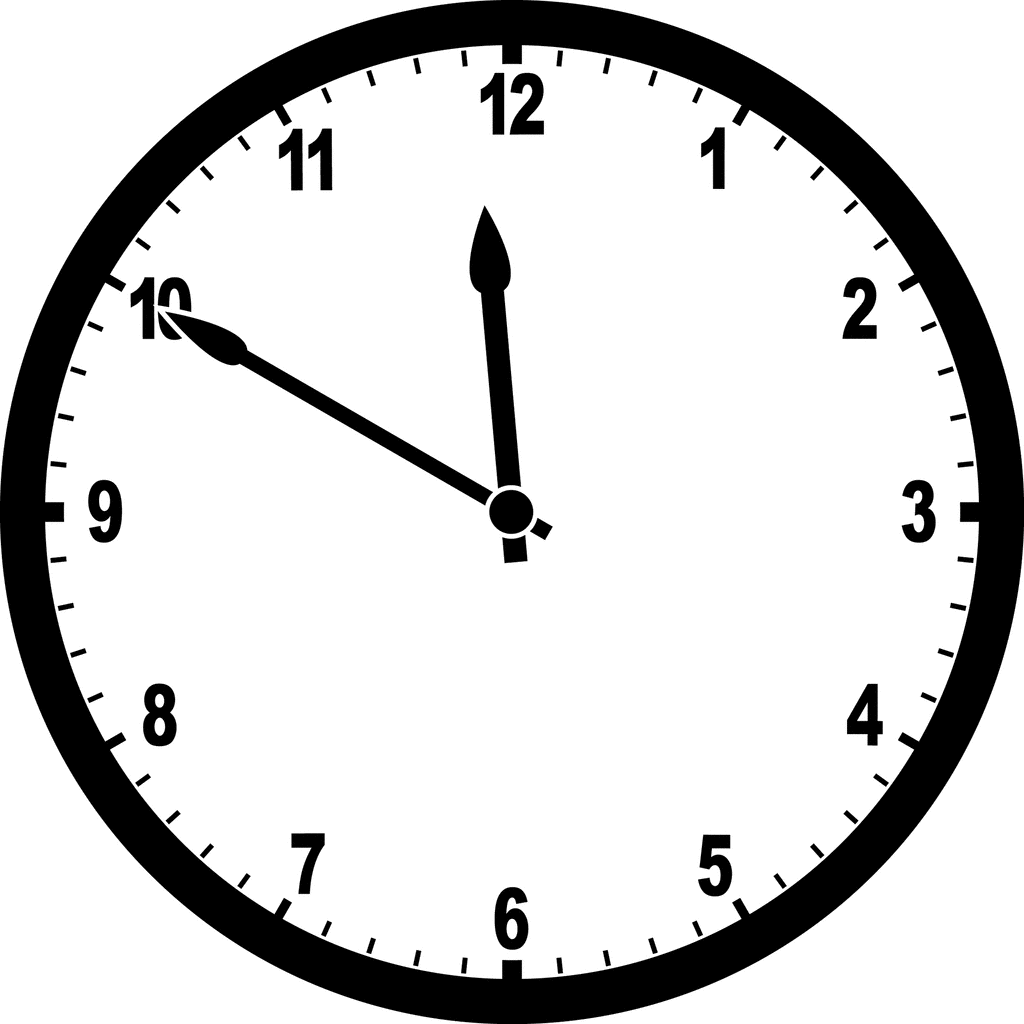
Calculate the angle of two clock pointers when time is 11:50


Continuing with some of the questions from Glassdoor's top 25 oddball questions... I am skipping around to whichever I find interesting. A couple of them are pretty common and already have rather standard answers. So, I picked this one because this turned out to have an extra step than what I originally thought.

Humor
Before I get to the common response, try one of the following if you're feeling lucky (disclaimer: make sure interviewer has the proper sense of humor)... the angle is the difference between meeting a deadline and getting fired... 0 degrees because it takes you 10 minutes to solve it... 90 or 180 on a digital clock... null, pointers have no direction in [programming language].

My Thought Process
At first glance, I thought the answer was 60 degrees because 11:50 is 10 minutes before noon/midnight. 10 minutes of 60 minutes in an hour = 1/6. Clock is 360 degrees, so 60 degrees. Then made a sanity check by trying to picture the clock at 11:50.

I quickly realized that the hour hand would not exactly be at the o'clock position. The hour hand would be slightly before the 0 degree (assuming o'clock is my reference). Each hour move 30 degrees (because each hour is the distance as 5 minutes which is half of 10 minutes). Thus for each minute, the hour hand would move 1/60 of 30 degrees, 0.5 degree.

The answer would be 60 degrees - 0.5 degrees * 10 minutes. Final answer is 55 degrees.

Additional Follow Up
A good potential follow up to this may be to provide the general equation (ie function, method, etc.) to generate the value for any time. Given X minutes and Y hours with noon as the 0 degree reference, the minutes degree will be X / 60 * 360 = X * 6 and hours degree will be X / 2 + 30 * Y. Thus, the final equation is |X * 6 - (X / 2 + 30 * Y)|. Test with original points, |50 * 6 - (50 / 2 + 30 * 11)| = |300 - (25 + 330)| = |-55| = 55. Test with 12:10, |10*6 - (10 / 2 + 30 * 0)| = |60 - (5 + 0)| = 55. Simplify the equation, | X * 5.5 + Y * 30|.

Add constraints... 0 <= Y < 24 and 0 <= X < 60. Y must be an integer; X must be a real number. If Y >= 12, then Y = Y - 12.

Some extra thoughts... If a graphic artist, then provide a time entry GUI. If animator, provide equation for reference to 3D space (ie angle if clock is angled at certain positions). If math, provide equation if only provided the positions of the two lines. If high school degree, use approximation because you should know that 3 and 9 are right angles so 90 degrees, so 10 (i.e. 50 minutes) and 11 breaks the 90 degrees into thirds, thus each hour is 30 degrees which gives you 60 degrees minus a few degrees. If physics, then ask about the velocity the clock is traveling at.

30 Degrees?


Guesstimation

Assuming you have figured there are 30 degrees between each hour, you can see that the answer must be greater than 30 degrees. From looking at the image above, you can see that the answer should be closer to 60 degrees. You will also notice that the hour hand is not exactly at the 12 mark. Therefore, the answer is less than 60 degrees. Mathematically, you should be able to estimate that the answer is between 30 and 60 degrees. If you eye ball the difference, you should be around 50-55 because 45 degrees would be symmetrically in the middle.

Misconception

I found that 30 degrees was a common answer to this question. This primarily comes because the image is of the hour hand on the 11 mark and the minute hand on the 10 mark. What is not considered is that the hour hand moved past the 11 mark due to the minute hand moving to the 10 mark.

Fortunately for me, my thought process was going from noon and going back 10 minutes. So I naturally picked up that the position of the hour hand was impacted by the minute hand. This is why I typically do a sanity check particularly with questions that appear simple but you get an uneasy feeling there is something amiss. For example, why would they be asking a simple geometric question in an interview? Or in this example, why would this be a top 25 list of oddball questions if the answer is so direct?

Reference

http://www.techrepublic.com/blog/career/glassdoors-top-25-oddball-interview-questions-for-2013/4783

Updated 1/24/2014 - Added section for 30 degrees to explain how the answer is not 30 degrees.